Essential Fall Protection Equipment for the Workplace: A Complete Guide
Working at heights is a necessary part of many industries, including construction, roofing, manufacturing, industrial maintenance, and HVAC. However, working above ground level introduces serious hazards that require proper planning, training, and protective equipment.
Falls are among the most significant workplace safety hazards. Having the right fall protection equipment can help prevent workers from reaching dangerous edges, restrict access to fall hazards, or safely arrest a fall if one occurs.
For employers, contractors, and safety managers, understanding the different types of fall protection equipment is essential to creating a safer working environment and meeting applicable Occupational Safety and Health Administration (OSHA) requirements.
From personal fall arrest systems and safety harnesses to guardrails, roof brackets, and ladder stabilization equipment, each product serves a specific purpose within a comprehensive workplace safety program.
In this guide, we will explore the essential types of fall protection equipment, how they work, important OSHA requirements, and how to select the appropriate equipment for your industry.
1. What Is Fall Protection Equipment?
Fall protection equipment refers to the systems, devices, and protective components used to prevent workers from falling or minimize the consequences of a fall.
This equipment is used in workplaces where employees may be exposed to elevated surfaces, unprotected edges, roof openings, ladders, platforms, and other fall hazards.
Fall protection generally falls into two primary categories: fall prevention and fall arrest.
Fall Prevention Equipment
Fall prevention equipment is designed to stop workers from reaching a fall hazard in the first place.
Examples include:
Guardrail systems.
Covers for holes and openings.
Personal fall restraint systems.
Properly designed access barriers.
Certain ladder stabilization and access safety products.
These systems help reduce exposure to fall hazards before an incident occurs.
Fall Arrest Equipment
Fall arrest equipment is designed to stop a worker after a fall has begun.
Common examples include:
Full-body safety harnesses.
Energy-absorbing lanyards.
Self-retracting lifelines.
Anchorage connectors.
Personal fall arrest systems.
Fall arrest equipment must be properly selected, configured, inspected, and used to function as intended.
Understanding the difference between prevention and arrest is important when developing a workplace fall protection program. Preventing a fall is generally preferable to stopping one after it happens.
2. Essential Types of Fall Protection Equipment
Different work environments require different fall protection solutions. The appropriate equipment depends on the height, work activity, surrounding hazards, and applicable safety regulations.
Below are some of the most common types of fall protection equipment used across the construction and industrial industries.
1. Full-Body Safety Harnesses
A full-body harness is one of the most recognizable components of a personal fall arrest system.
Unlike older body belts, full-body harnesses distribute fall arrest forces across several areas of the body, including the shoulders, thighs, pelvis, and torso.
Important harness features include:
Adjustable shoulder and leg straps.
Appropriate attachment points.
Secure buckles and connectors.
Manufacturer identification and inspection information.
Compatibility with connecting devices.
Proper fit is critical. Harnesses must be adjusted according to manufacturer instructions and inspected before use.
Workers should also understand how to properly connect their harnesses to compatible anchorage systems.
2. Energy-Absorbing Lanyards
Lanyards connect a worker's harness to an appropriate anchorage connector or lifeline.
Energy-absorbing lanyards are designed to reduce the forces experienced during a fall by dissipating energy through a controlled deployment mechanism.
Common considerations include:
Lanyard length.
Energy absorber specifications.
Connector compatibility.
Fall clearance requirements.
Potential swing fall hazards.
Workers must understand the limitations of their lanyards and ensure that the selected equipment is appropriate for the specific application.
3. Self-Retracting Lifelines
Self-retracting lifelines, commonly referred to as SRLs, automatically extend and retract as workers move.
Many SRLs incorporate a locking mechanism designed to engage during a sudden fall, limiting the distance a worker can fall before the device arrests the fall.
They are commonly used in:
Construction.
Industrial maintenance.
Manufacturing facilities.
Roofing operations.
Elevated work platforms.
SRLs must be selected according to the manufacturer's specifications, including applicable anchorage orientation, clearance, and compatibility requirements.
4. Anchorage Connectors
An anchorage connector provides the connection between a personal fall protection system and an appropriate structural anchorage.
Examples include:
Beam clamps.
Roof anchors.
Concrete anchors.
Specialized anchorage connectors.
Temporary anchorage devices.
Anchorage selection is one of the most important aspects of a personal fall arrest system.
Under OSHA 29 CFR 1926.502(d)(15), anchorages used for personal fall arrest systems must generally support at least 5,000 pounds per attached employee or be designed, installed, and used as part of a complete personal fall arrest system under the supervision of a qualified person, with a safety factor of at least two.
Never assume that a structural component is suitable for anchorage without verifying its capacity and intended use.
5. Guardrail Systems
Guardrails are an important form of collective fall protection.
Rather than requiring each worker to connect to an individual anchorage point, properly designed guardrails establish physical barriers around exposed edges and other designated areas.
Typical components include:
Top rails.
Midrails.
Support posts.
Mounting components.
Toeboards where required.
Guardrail systems are commonly used on commercial roofs, construction projects, elevated platforms, and industrial facilities.
They can be particularly useful in areas where multiple workers need protection at the same time.
OSHA 29 CFR 1926.502 establishes specific requirements for guardrail system design and performance.
6. Safety Nets
Safety net systems are designed to catch workers who fall from elevated work areas.
They are commonly used in certain construction applications where other fall protection methods may not be practical.
Safety nets must be properly installed, positioned, inspected, and maintained according to applicable requirements.
Their placement and clearance must be evaluated to ensure that a falling worker will be properly caught before striking a lower surface or obstruction.
7. Roof Brackets and Roofing Safety Equipment
Roofing professionals frequently work on sloped surfaces and elevated roof decks where additional safety equipment is necessary.
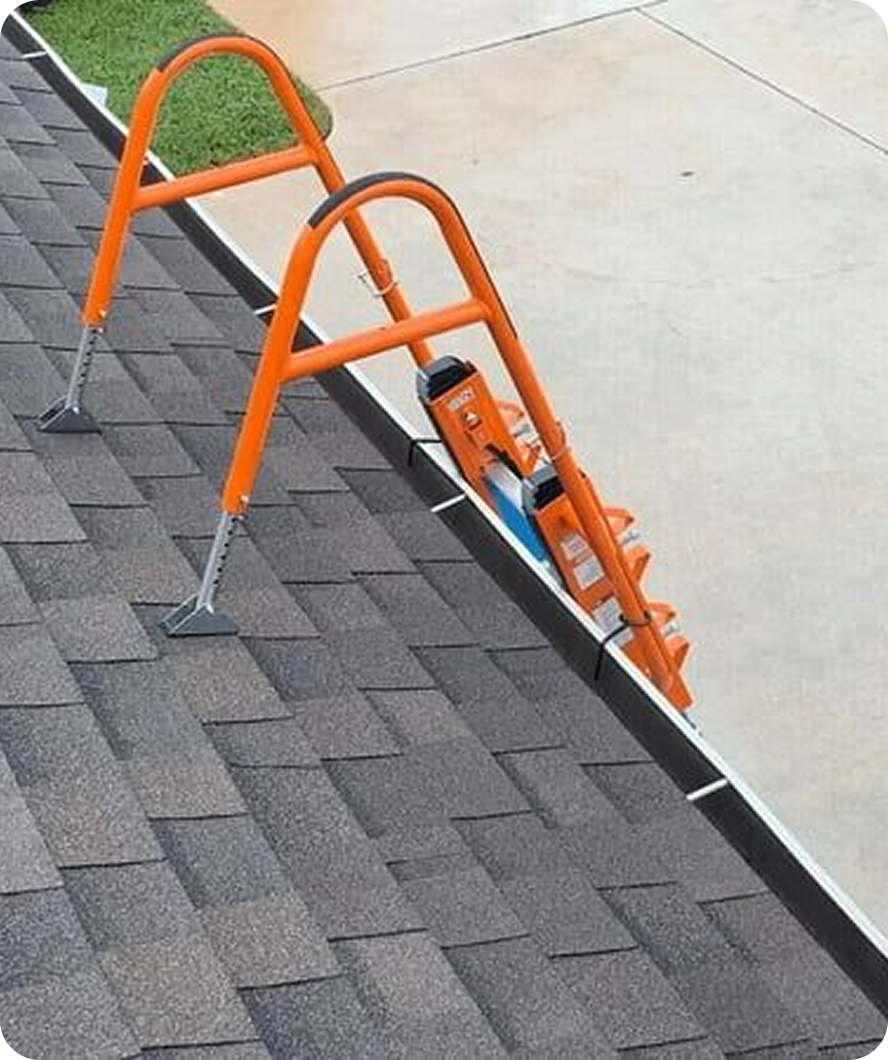
Roof brackets and other specialized roofing safety products can provide support for specific roofing applications, depending on their design and intended use.
Examples include:
Roof brackets.
Roof edge protection systems.
Guardrail mounting systems.
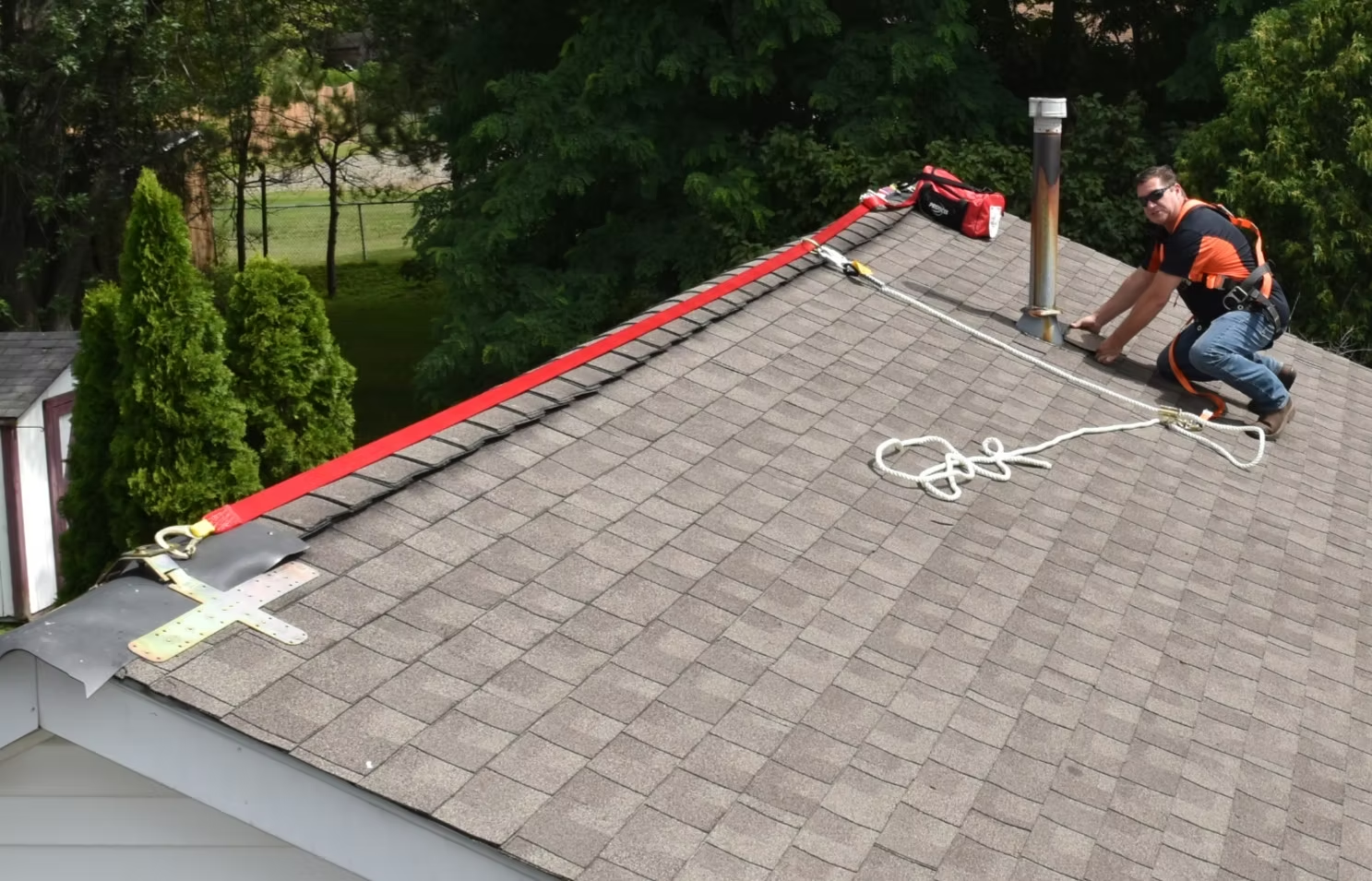
Temporary roof anchorage products.
Specialized roofing access equipment.
Roofing contractors should select equipment based on the roof structure, work being performed, and manufacturer specifications.
8. Ladder Stabilization Equipment
Ladders are one of the most frequently used pieces of equipment in construction, roofing, and maintenance operations.
However, improper ladder setup can create hazards involving sliding, shifting, and kick-out.
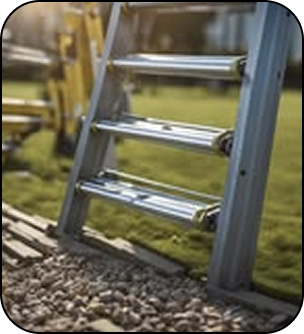
Ladder stabilization products are designed to address certain ladder movement and stability concerns.
Important ladder safety equipment considerations include:
Proper ladder feet and contact surfaces.
Securement and attachment devices.
Stabilizing accessories.
Ladder inspection.
Proper positioning and setup.
On Top Safety's Life Grab Upper and Lower Ladder Stabilizers are designed to help reduce ladder movement and improve stability.
These products can complement an overall ladder safety program, but they do not replace proper ladder setup, securement, or required fall protection.
3. Understanding OSHA Fall Protection Requirements
The Occupational Safety and Health Administration establishes workplace safety regulations that employers must follow when employees are exposed to fall hazards.
For construction activities, one of the most important regulations is OSHA 29 CFR 1926 Subpart M, which covers fall protection.
OSHA's 6-Foot Rule
Under many construction fall protection provisions, employers must provide appropriate fall protection when workers are exposed to falls of 6 feet or more above a lower level.
However, requirements differ depending on the type of work being performed.
For example:
General construction activities have specific fall protection requirements under 1926.501(b)(1).
Low-slope roofing activities are addressed under 1926.501(b)(10).
Steep-roof activities are addressed under 1926.501(b)(11).
Residential construction is addressed under 1926.501(b)(13).
Employers should review the applicable provisions rather than assume that the same fall protection method is appropriate for every job.
OSHA Personal Fall Arrest System Requirements
OSHA 1926.502(d) establishes criteria for personal fall arrest systems.
Important considerations include:
Full-body harness requirements.
Anchorage strength and design.
Connector compatibility.
Fall distance limitations.
Equipment inspection.
Proper system configuration.
For example, personal fall arrest systems generally must limit free fall to no more than 6 feet and prevent contact with a lower level.
OSHA Fall Protection Training
OSHA 1926.503 requires employers to provide fall protection training to employees who may be exposed to fall hazards.
Training should address:
Recognizing fall hazards.
Understanding protective systems.
Correct equipment installation and inspection.
Proper use of fall protection equipment.
Applicable workplace safety procedures.
Employers must maintain written training certification records and provide retraining when changes or deficiencies indicate that previous training is no longer adequate.
Official OSHA resources:
Fall Protection Standards: https://www.osha.gov/laws-regs/regulations/standardnumber/1926/1926SubpartM
OSHA Fall Protection in Construction: https://www.osha.gov/fall-protection/construction
OSHA Training Requirements: https://www.osha.gov/laws-regs/regulations/standardnumber/1926/1926.503
4. How to Choose the Right Fall Protection Equipment
Selecting fall protection equipment should begin with identifying the hazards associated with the work environment.
Not every system is appropriate for every application.
Employers and safety managers should consider several important factors.
Identify the Fall Hazards
Start by evaluating the work area.
Consider:
Elevated work surfaces.
Unprotected roof edges.
Floor and roof openings.
Ladder access points.
Sloped surfaces.
Fragile roof materials.
Potential swing fall hazards.
Nearby obstructions and lower levels.
A proper hazard assessment helps determine which protective measures are necessary.
Understand the Work Being Performed
Different industries require different equipment.
For example, a commercial roofing contractor may require guardrails, roof brackets, and personal fall arrest systems.
An HVAC technician may need appropriate roof access equipment and fall protection for rooftop maintenance.
An industrial maintenance worker may require an SRL and a properly designed anchorage system.
Equipment selection should reflect the actual work activity rather than relying on a generic collection of safety products.
Verify Equipment Compatibility
Fall protection equipment is often used as part of a complete system.
Harnesses, connectors, lanyards, lifelines, and anchorage components must be compatible with one another.
Using incompatible components can compromise system performance.
Always follow manufacturer instructions and applicable safety requirements.
Evaluate Durability and Maintenance
Workplace safety equipment is often exposed to harsh conditions.
Consider:
Corrosion resistance.
Material quality.
Environmental exposure.
Maintenance requirements.
Product lifespan.
Replacement component availability.
Purchasing decisions should consider the equipment's intended service environment and total lifecycle requirements.
5. Fall Protection Equipment Inspection and Maintenance
Equipment inspections are essential to maintaining an effective workplace fall protection program.
Even high-quality equipment can become unsafe if it is damaged, improperly maintained, or used outside its intended specifications.
Workers should understand how to inspect their equipment before each use and recognize when an item needs to be removed from service.
Harness Inspection
Inspect harnesses for:
Cuts, fraying, or damaged webbing.
Burn marks or chemical damage.
Damaged stitching.
Corroded or deformed hardware.
Malfunctioning buckles.
Missing or illegible identification labels.
Lanyard and Lifeline Inspection
Check for:
Damaged webbing or cables.
Worn stitching.
Deformed connectors.
Damaged energy absorbers.
Improper operation of retractable devices.
Signs of previous fall loading.
Anchorage and Connector Inspection
Verify that anchorage components are appropriate for the application and inspect them for visible damage, corrosion, deformation, or improper installation.
Guardrail and Roof Equipment Inspection
Inspect:
Structural posts and rails.
Mounting components.
Fasteners and connections.
Roof brackets.
Stabilizing equipment.
Any other components used in the protective system.
Equipment that has been involved in a fall or is identified as defective must be handled according to applicable requirements and manufacturer instructions before being returned to service.
6. Fall Prevention vs. Fall Arrest: Understanding the Difference
One of the most important concepts in workplace safety is understanding the difference between preventing a fall and arresting a fall.
Although both approaches are important, they serve different purposes.
Fall Prevention
Fall prevention systems are intended to keep workers from reaching a fall hazard.
Examples include:
Guardrail systems.
Properly installed covers.
Personal fall restraint systems.
Appropriate barriers and access controls.
These systems help eliminate or reduce exposure to dangerous edges and openings.
Fall Arrest
Fall arrest systems are designed to stop a worker after a fall has occurred.
Examples include:
Full-body harnesses.
Energy-absorbing lanyards.
Self-retracting lifelines.
Anchorage systems.
These systems require careful configuration to ensure that the worker is stopped before contacting a lower level or obstruction.
Which Is Better?
Whenever practical and appropriate, preventing a fall is preferable to relying on a system to arrest one.
Collective protection methods, such as guardrails, can provide significant advantages when multiple workers are operating near exposed edges.
However, many projects require personal fall arrest or other protective systems.
The appropriate solution depends on the specific work environment and applicable regulations.
7. Industries That Rely on Fall Protection Equipment
Fall protection is not limited to roofing and construction.
Many industries require employees to work at elevated heights as part of their daily operations.
Roofing and Construction
Roofing professionals work on sloped surfaces, commercial rooftops, and elevated structures.
Common equipment includes:
Personal fall arrest systems.
Roof brackets.
Guardrails.
Ladder stabilization products.
Anchorage systems.
HVAC and Mechanical Services
HVAC technicians frequently access rooftops to install, repair, and maintain equipment.
Fall protection considerations include safe ladder access, roof edge protection, and appropriate personal protective systems.
Manufacturing and Industrial Facilities
Industrial workers may access elevated platforms, machinery, and equipment for inspections and maintenance.
Guardrails, personal fall protection systems, and other protective equipment help address these hazards.
Bridge and Infrastructure Maintenance
Workers performing bridge inspections and maintenance may operate above roadways, water, and other lower levels.
Specialized anchorage systems and personal fall protection equipment are important considerations.
Solar Installation
Solar installation crews work on residential and commercial rooftops.
These projects may involve unprotected edges, sloped surfaces, and changing roof conditions.
Appropriate fall protection planning and equipment selection are essential.
8. Creating a Comprehensive Workplace Fall Protection Program
Purchasing safety equipment is only one part of an effective fall protection program.
Employers must establish procedures that ensure employees understand how to identify hazards and properly use protective systems.
A comprehensive program should include the following elements.
1. Workplace hazard assessments
Evaluate work areas before employees begin elevated work.
2. Proper equipment selection
Choose equipment that addresses the hazards and is appropriate for the intended application.
3. Employee training
Provide instruction on hazard recognition, equipment operation, inspection, and applicable procedures.
4. Regular inspections
Establish inspection procedures for all equipment and remove defective products from service.
5. Emergency rescue planning
Develop procedures for responding to fall incidents, including prompt rescue of workers suspended in personal fall arrest systems.
6. Ongoing safety evaluations
Review workplace conditions, equipment performance, and employee practices to identify opportunities for improvement.
A successful fall protection program is an ongoing commitment rather than a one-time purchase.
9. Investing in the Right Fall Protection Equipment
Choosing appropriate safety equipment is an investment in the people who keep businesses operating.
For contractors and employers, the right products can help address specific jobsite hazards, support workplace safety programs, and improve the consistency of daily operations.
However, equipment should always be evaluated based on its intended purpose, performance specifications, compatibility, and applicable safety requirements.
At On Top Safety, we develop innovative safety products designed to address real-world challenges faced by roofing contractors, construction professionals, and workers operating at heights.
Our product line includes solutions for several important workplace safety applications.
Roof Safety and Fall Protection
The Life Grab 360 Roof Bracket and Elevated Roof Bracket are designed for specialized roofing applications.
These products provide contractors with additional options when evaluating roofing safety and fall protection equipment.
Guardrail Systems
The Fast Track Guardrail System and Fast Track 2x4 System offer solutions for contractors evaluating roof edge protection and temporary guardrail applications.
Ladder Stabilization
The Life Grab Upper and Lower Ladder Stabilizers are designed to help reduce ladder movement and improve stability.
These products address an important safety consideration for roofing professionals, HVAC technicians, and other workers who regularly use extension ladders.
Specialized Fall Protection Solutions
On Top Safety also offers additional products designed for specialized applications, including tie-off carts and integrated shock pack technology.
By developing products that address specific industry challenges, we aim to provide contractors with practical equipment solutions that complement comprehensive workplace safety programs.
Explore the complete On Top Safety product line to learn more about our fall protection and workplace safety solutions.
Frequently Asked Questions About Fall Protection Equipment
1. What equipment is required for fall protection?
Required equipment depends on the work activity and applicable safety regulations. Common solutions include guardrails, full-body harnesses, lanyards, lifelines, anchorage systems, safety nets, and other protective equipment.
2. What are the three main components of a personal fall arrest system?
A traditional personal fall arrest system consists of three primary components:
Anchorage.
Body harness.
Connecting device.
These components must work together as a compatible system.
3. At what height does OSHA require fall protection?
For many construction activities, OSHA requires fall protection when workers are exposed to falls of 6 feet or more above a lower level. Requirements vary by activity and applicable standard.
4. What is the difference between fall prevention and fall arrest?
Fall prevention equipment helps stop workers from reaching a fall hazard. Fall arrest equipment is designed to stop a worker after a fall has occurred.
5. How often should fall protection equipment be inspected?
Workers should inspect their equipment before each use. Additional inspections must follow manufacturer instructions and applicable requirements.
6. What is the most important piece of fall protection equipment?
There is no single piece of equipment that works for every situation. The appropriate solution depends on the work environment, hazards, and protective system being used.
7. Are ladder stabilizers considered fall protection equipment?
Ladder stabilizers are ladder safety accessories designed to address movement and stability concerns. They can complement a workplace safety program but should not be confused with personal fall arrest equipment or substitutes for required fall protection.
8. What is the difference between a safety harness and a fall protection system?
A safety harness is one component of a personal fall arrest system. A complete system also includes an appropriate anchorage and compatible connecting device.
9. Do employers have to provide fall protection training?
Yes. OSHA 1926.503 requires employers to provide fall protection training for employees who may be exposed to fall hazards in construction activities covered by Subpart M.
10. Why is rescue planning important?
Workers suspended in a personal fall arrest system may require prompt rescue. Employers should establish appropriate rescue procedures before work begins.
Final Thoughts: Protecting Workers at Every Height
Fall protection is one of the most important components of workplace safety.
From construction sites and commercial rooftops to industrial facilities and maintenance operations, workers rely on properly selected equipment to address the hazards associated with elevated work.
Understanding the differences between fall prevention and fall arrest, selecting compatible equipment, conducting regular inspections, and providing effective employee training are all essential parts of a successful safety program.
At On Top Safety, our mission is to develop innovative safety solutions that address the challenges faced by professionals working at heights.
We believe that better equipment, practical innovation, and a commitment to workplace safety can make a meaningful difference across the industries we serve.