Ladder Safety for Construction and Roofing Professionals
Ladders are among the most frequently used tools in construction, roofing, HVAC, and industrial maintenance. Whether workers are accessing rooftops, servicing equipment, or performing elevated repairs, ladders provide essential access to elevated work areas.
However, improper ladder setup, inadequate securement, unstable ground conditions, and equipment defects can create serious workplace hazards.
Ladder-related falls are a significant concern across the construction industry. Even a seemingly routine task can become dangerous when a ladder shifts, slides, or loses stability.
For contractors, employers, and safety managers, understanding proper ladder safety procedures is essential to protecting workers and maintaining a safe jobsite.
In this guide, we will cover essential ladder safety practices, OSHA requirements, extension ladder positioning, ladder stabilization, common causes of ladder kick-out, and equipment that can help improve ladder stability.
1. Why Is Ladder Safety Important?
Ladders are used in nearly every area of construction and maintenance. Despite their everyday use, they are frequently involved in workplace falls and injuries.
Common ladder-related hazards include:
Ladder sliding or kick-out.
Improper ladder positioning.
Uneven or unstable ground.
Damaged ladder components.
Overreaching while climbing.
Incorrect ladder selection.
Inadequate ladder securement.
Electrical contact hazards.
Many of these hazards can be addressed through proper training, equipment inspections, and appropriate ladder stabilization practices.
For employers, establishing consistent ladder safety procedures can help reduce workplace risks and improve employee awareness.
For workers, understanding how to properly select, position, secure, and use a ladder is an essential part of working safely at heights.
2. Understanding the Different Types of Ladders
Selecting the correct ladder is the first step toward safer access and elevated work.
Different ladder designs serve different purposes, and using the wrong type can introduce unnecessary hazards.
Extension Ladders
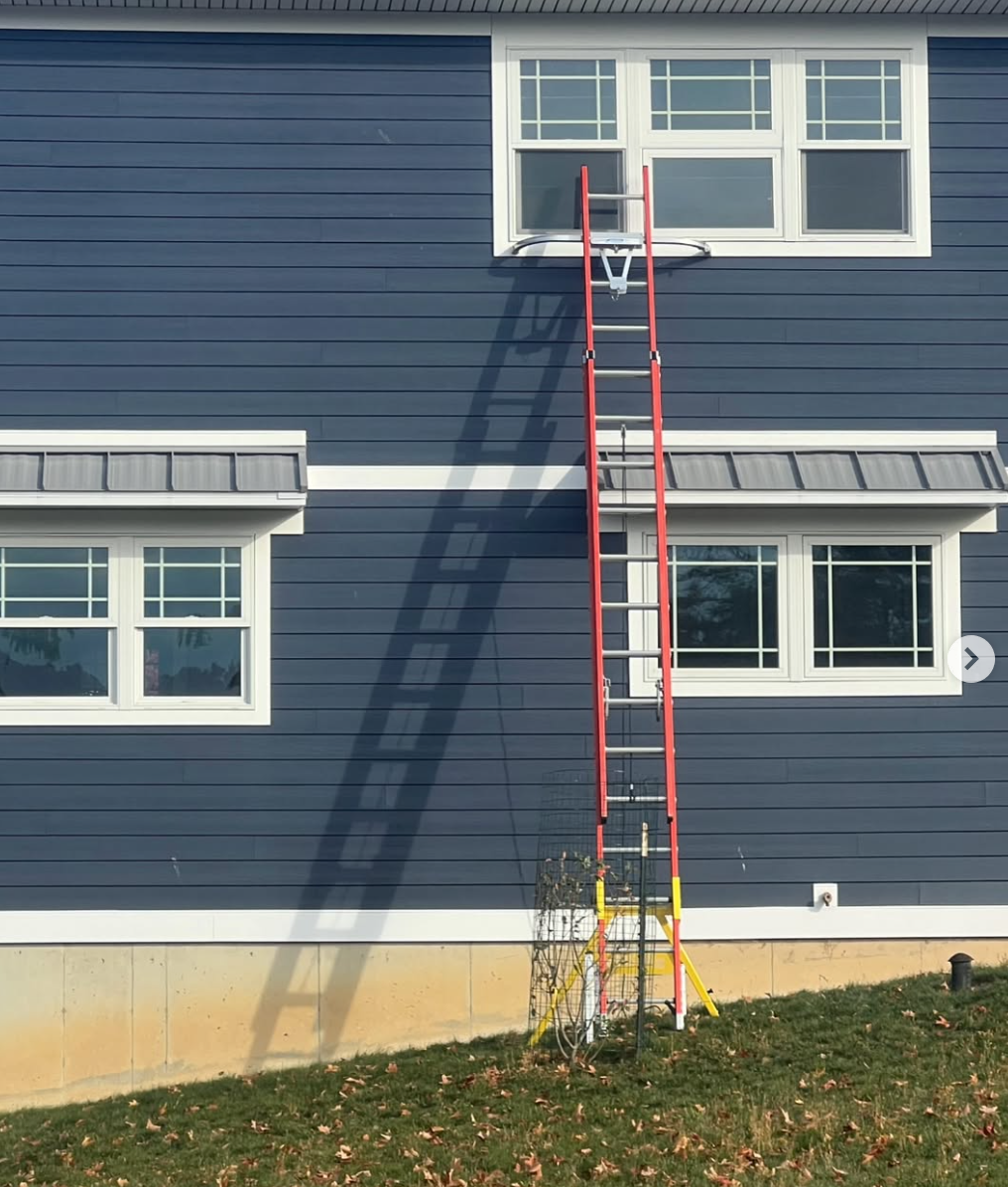
Extension ladders are commonly used in roofing, construction, and maintenance because they provide access to elevated surfaces.
They are designed to extend to different heights and are frequently used to access rooftops and upper building levels.
Important considerations include:
Proper extension and locking.
Appropriate working height.
Correct positioning angle.
Secure footing.
Adequate ladder support.
Proper securement.
Extension ladders should be inspected before use to ensure their rails, rungs, locks, and other components are functioning properly.
Step Ladders
Step ladders are self-supporting ladders commonly used for indoor and outdoor maintenance tasks.
They must be fully opened and equipped with functional spreaders or locking devices before use.
Workers should never stand on the top step or top cap unless the ladder is specifically designed for that purpose.
Platform Ladders
Platform ladders provide a larger standing surface for certain elevated tasks.
They are commonly used in warehouses, maintenance facilities, and industrial environments.
Employees should follow the manufacturer's instructions regarding platform capacity and safe working positions.
Specialized Ladders
Certain industries use specialized ladders designed for particular environments or applications.
Examples include:
Fiberglass ladders for certain electrical applications.
Articulating ladders.
Job-made ladders.
Fixed industrial ladders.
Specialized access ladders.
Regardless of ladder type, employees should understand the equipment's intended purpose and load limitations.
3. How to Properly Set Up an Extension Ladder
Improper ladder setup is one of the most common contributors to ladder instability.
A ladder positioned at an incorrect angle or placed on an unsuitable surface can shift or slide during use.
Following proper setup procedures is essential.
Follow the 4-to-1 Ladder Rule
OSHA 29 CFR 1926.1053(b)(5)(i) establishes the appropriate positioning angle for non-self-supporting portable ladders.
The horizontal distance from the top support to the foot of the ladder should be approximately one-quarter of the ladder's working length.
This is commonly referred to as the 4-to-1 rule.
For every 4 feet of vertical working height, the ladder base should be positioned approximately 1 foot away from the supporting surface.
Use Stable Ground
Ladders should be positioned on stable and level surfaces unless they are secured to prevent accidental displacement.
Avoid placing ladders on:
Loose gravel.
Mud or soft soil.
Wet or slippery surfaces.
Unstable materials.
Uneven ground without appropriate adjustments.
When ground conditions are uneven, use equipment specifically designed for the ladder and application.
Extend the Ladder Above the Landing Surface
When portable ladders are used to access an upper landing surface, OSHA generally requires the side rails to extend at least 3 feet above that landing.
If this extension is not possible because of the ladder's length, the ladder must be secured at the top to a rigid support that will not deflect, and an appropriate grasping device must be provided.
Secure the Ladder When Required
Ladders should be secured when necessary to prevent accidental movement or displacement.
This is especially important when ladders are positioned in areas exposed to traffic, workplace activity, or other conditions that could cause them to shift.
Proper setup should always be evaluated before a worker begins climbing.
4. Understanding Ladder Kick-Out and Sliding Hazards
One of the most dangerous ladder-related hazards is ladder kick-out.
Ladder kick-out occurs when the bottom of an extension ladder moves away from its supporting surface, causing the ladder to lose its intended position.
This movement can happen suddenly, leaving a worker with little time to react.
What Causes Ladder Kick-Out?
Several factors can contribute to ladder kick-out.
Improper ladder angle
A ladder positioned too far from or too close to its supporting surface can become unstable.
Slippery ground conditions
Wet concrete, metal surfaces, mud, and other slippery materials can reduce friction between ladder feet and the ground.
Insufficient securement
An improperly secured ladder may shift during climbing or when additional force is applied.
Uneven ground
Uneven or unstable surfaces can create inconsistent support at the ladder's base.
Excessive movement
Overreaching, sudden movements, and improper climbing practices can change how forces are distributed through the ladder.
How Can Ladder Kick-Out Be Reduced?
Reducing ladder kick-out requires a combination of proper setup and appropriate equipment.
Important practices include:
Positioning ladders at the correct angle.
Using stable and suitable ground surfaces.
Inspecting ladder feet and contact points.
Securing ladders when required.
Avoiding sudden movements.
Using compatible ladder stabilization equipment.
Following manufacturer instructions.
Ladder stabilization products can provide additional support by addressing movement at specific contact points.
However, stabilizers should complement proper setup and securement rather than replace them.
5. Ladder Stabilization Equipment: Improving Extension Ladder Stability
For workers who regularly use extension ladders, stabilization equipment can be an important addition to their safety practices.
Traditional ladder setups rely on the ladder's contact points, proper positioning, and appropriate securement.
Specialized stabilization equipment can provide additional support by helping address movement, shifting, and instability.
Upper Ladder Stabilizers
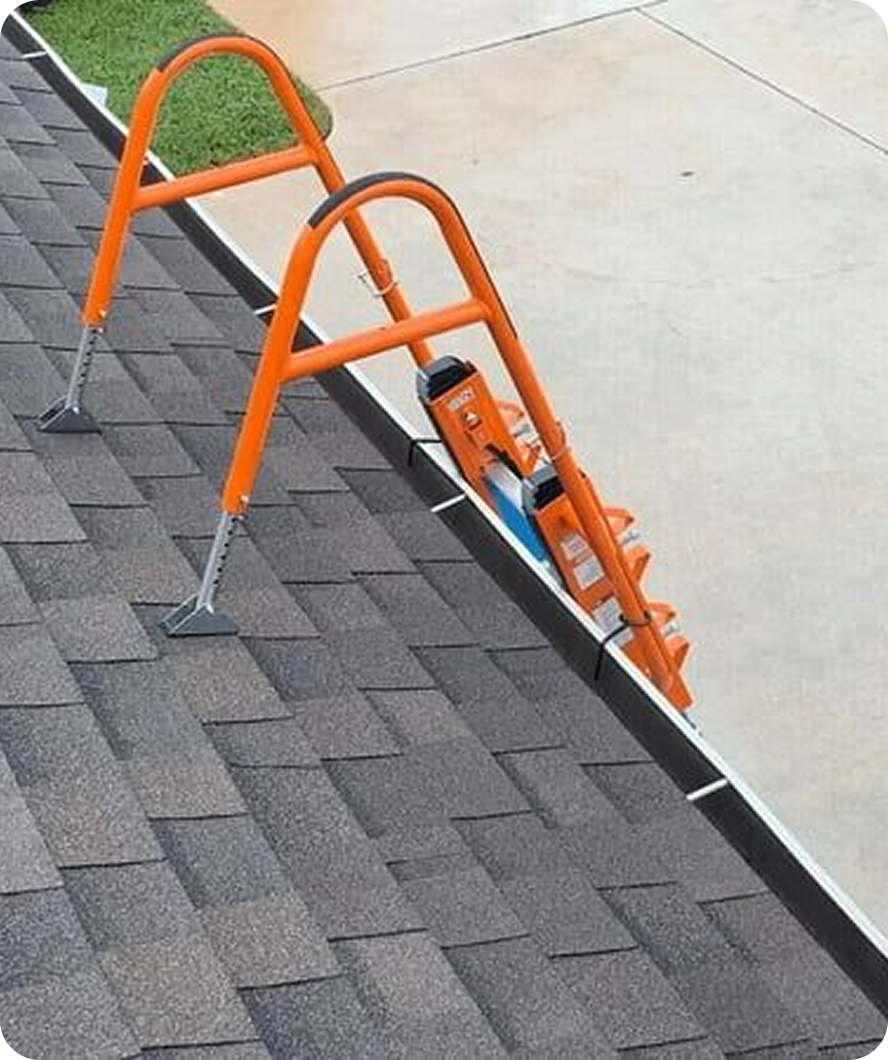
Upper ladder stabilizers attach near the top of an extension ladder and provide additional support at the upper contact area.
Depending on their design, these products can help:
Improve ladder contact and support.
Address movement near the upper ladder.
Provide additional securement.
Accommodate certain uneven access conditions.
On Top Safety's Life Grab Upper Ladder Stabilizer is designed with two securement hooks, ratcheting straps, and adjustable telescopic legs.
Its design provides additional securement points and allows adjustment for uneven terrain.
Lower Ladder Stabilizers
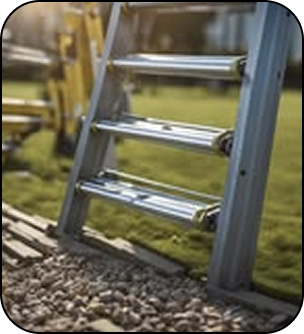
Lower ladder stabilization focuses on the ladder's base and its interaction with the supporting surface.
Additional stabilization at the lower portion of a ladder can help address movement and improve the overall setup.
The Life Grab Lower Ladder Stabilizer is another specialized solution in On Top Safety's ladder stabilization product line.
Why Use Additional Ladder Stabilization?
For roofing contractors, HVAC technicians, and other service professionals, ladders are often used repeatedly throughout the workday.
Additional stabilization equipment can provide another layer of support when properly selected and installed.
However, no stabilizer eliminates every ladder hazard. Workers must still follow appropriate positioning, inspection, securement, and usage procedures.
6. OSHA Ladder Safety Requirements
The Occupational Safety and Health Administration establishes specific ladder safety requirements for construction workplaces.
One of the primary standards is OSHA 29 CFR 1926.1053, which addresses ladder design, inspection, positioning, and use.
Understanding these requirements is essential for employers and employees who regularly work with ladders.
OSHA Ladder Setup Requirements
Some important OSHA requirements include:
Proper ladder angle: Non-self-supporting portable ladders must be positioned at approximately the 4-to-1 ratio.
Stable surfaces: Ladders must be used on stable and level surfaces unless secured to prevent accidental displacement.
Upper landing access: Portable ladders used to access upper landing surfaces must generally extend at least 3 feet above the landing or be secured with an appropriate grasping device when that extension is not possible.
Load capacity: Ladders must not be loaded beyond their maximum intended load or manufacturer's rated capacity.
Electrical hazards: Ladders with nonconductive side rails must be used where workers or ladders could contact exposed energized electrical equipment, subject to the applicable exceptions.
OSHA Ladder Inspection Requirements
Under 1926.1053(b)(15), ladders must be inspected by a competent person for visible defects periodically and after any occurrence that could affect their safe use.
Portable ladders with structural defects must be marked or tagged as defective and removed from service until repaired.
OSHA Ladder Climbing Requirements
OSHA also establishes specific requirements for ladder use.
Workers must:
Face the ladder when ascending or descending.
Use at least one hand to grasp the ladder while climbing.
Avoid carrying objects or loads that could cause loss of balance.
Never move, shift, or extend an occupied ladder.
Keep the area around the top and bottom of ladders clear.
Employers should also provide ladder and stairway training as required under OSHA 29 CFR 1926.1060.
Official OSHA resources:
OSHA 1926.1053: Ladder Requirements
https://www.osha.gov/laws-regs/regulations/standardnumber/1926/1926.1053OSHA 1926.1060: Training Requirements
https://www.osha.gov/laws-regs/regulations/standardnumber/1926/1926.1060
7. Essential Ladder Safety Practices for Every Worker
Proper ladder use requires consistent habits and awareness.
Before climbing, employees should evaluate their equipment, surroundings, and working conditions.
Inspect the Ladder Before Use
Look for:
Cracked or damaged side rails.
Missing or loose rungs.
Damaged locks and extension mechanisms.
Worn ladder feet.
Corrosion or deterioration.
Missing safety labels.
Damaged stabilization attachments.
Defective ladders should be removed from service.
Maintain Proper Climbing Practices
Workers should face the ladder when ascending and descending.
Maintaining three points of contact is a widely recommended ladder safety practice when practical.
This generally means keeping two hands and one foot, or two feet and one hand, in contact with the ladder.
Avoid carrying tools or materials in your hands when doing so could compromise balance. Use appropriate tool belts, hoists, or other material-handling methods.
Avoid Overreaching
Keep your body positioned between the ladder's side rails.
Overreaching can shift the ladder's center of gravity and increase the likelihood of instability.
If you cannot comfortably reach the work area, reposition the ladder rather than leaning beyond a safe working position.
Wear Appropriate Footwear
Shoes with suitable slip-resistant soles can help improve traction when climbing.
Avoid footwear that is excessively worn, contaminated, or otherwise unsuitable for the work environment.
Be Aware of Electrical Hazards
Metal ladders can conduct electricity.
Workers should evaluate overhead power lines, exposed wiring, and other electrical hazards before positioning a ladder.
Use appropriate nonconductive ladders where required.
8. Common Ladder Safety Mistakes to Avoid
Even experienced professionals can develop habits that increase ladder-related risks.
Some common mistakes include:
1. Incorrect ladder positioning
Failing to follow the 4-to-1 rule can compromise ladder stability.
2. Ignoring ground conditions
Uneven or slippery surfaces can contribute to accidental displacement.
3. Failing to secure ladders
Ladders exposed to traffic or workplace activity may require additional securement.
4. Overloading the ladder
Exceeding the manufacturer's load capacity can compromise structural integrity.
5. Using damaged equipment
Cracked rails, worn feet, and defective locks should never be ignored.
6. Overreaching
Leaning outside the side rails can cause instability.
7. Skipping inspections
Regular inspections help identify defects before a ladder is used.
8. Assuming accessories replace proper setup
Stabilizers and other accessories should complement correct positioning, inspection, and securement practices.
Addressing these common mistakes through employee training and appropriate equipment selection can help improve jobsite safety.
9. Ladder Safety for Roofing and HVAC Professionals
Certain industries rely on extension ladders more heavily than others.
Roofing contractors and HVAC technicians frequently use ladders to access rooftops, elevated equipment, and service areas.
These environments can introduce additional challenges.
Roofing Applications
Roofing professionals often position extension ladders against building structures to access roof surfaces.
Potential hazards include:
Uneven ground surrounding the building.
Sloped or slippery surfaces.
Roof edges and landing transitions.
Repeated ladder repositioning.
Material and tool handling.
Changing weather conditions.
Proper ladder setup and stabilization are especially important when workers repeatedly access elevated roof areas.
HVAC Applications
HVAC technicians frequently access rooftop units and mechanical equipment.
These jobs may require workers to carry tools, navigate uneven ground, and reposition ladders throughout the workday.
Employers should evaluate access conditions and ensure that ladder equipment is appropriate for the intended application.
Construction and Maintenance
Construction and maintenance professionals use ladders for a wide range of elevated tasks.
Regular inspections, proper positioning, and appropriate stabilization equipment should be part of their everyday safety procedures.
10. Choosing the Right Ladder Stabilization Equipment
Not all ladder stabilizers serve the same purpose.
When evaluating ladder stabilization products, consider the following:
Compatibility: Verify that the stabilizer is approved for the ladder type and configuration being used.
Securement: Understand how the equipment attaches to and supports the ladder.
Adjustability: Consider whether the product can accommodate the conditions encountered on different jobsites.
Durability: Evaluate materials, construction, and suitability for the intended working environment.
Weight and portability: Workers who move between projects may benefit from equipment that is practical to transport.
Manufacturer instructions: Follow all installation, inspection, and usage limitations.
The right stabilization equipment should complement an overall ladder safety program and address the specific movement or stability concerns associated with the application.
Frequently Asked Questions About Ladder Safety
1. What is the 4-to-1 rule for ladders?
The 4-to-1 rule is a guideline for positioning non-self-supporting portable ladders. For every 4 feet of vertical working length, the base should be approximately 1 foot away from the supporting surface.
2. How far should an extension ladder extend above a roof?
When used to access an upper landing surface, OSHA generally requires portable ladder side rails to extend at least 3 feet above the landing. When that is not possible, the ladder must be secured at the top to a rigid support and an appropriate grasping device provided.
3. What causes ladder kick-out?
Ladder kick-out occurs when the bottom of an extension ladder moves away from its supporting surface. Improper positioning, slippery ground, inadequate securement, and unstable conditions can contribute to this movement.
4. How can you prevent a ladder from sliding?
Use stable surfaces, position the ladder correctly, inspect its feet, and secure it when required. Compatible stabilization equipment can provide additional support when used according to manufacturer instructions.
5. How often should ladders be inspected?
OSHA requires periodic inspection by a competent person and inspection after any occurrence that could affect safe use. Workers should also check ladders before use.
6. What is the safest angle for an extension ladder?
The recommended positioning for a non-self-supporting portable ladder is approximately 75.5 degrees from horizontal, following the 4-to-1 rule.
7. Can ladder stabilizers prevent ladder kick-out?
Ladder stabilizers are designed to address certain movement and stability concerns. Their effectiveness depends on their design, installation, and intended application. They should not replace proper ladder positioning and securement.
8. Should you maintain three points of contact on a ladder?
Maintaining three points of contact is a widely recommended safety practice when practical. OSHA's construction ladder standard specifically requires employees to face the ladder and use at least one hand to grasp it while ascending or descending.
9. Can you use a ladder on uneven ground?
Ladders should be used on stable and level surfaces unless secured to prevent accidental displacement. Appropriate ladder leveling equipment may be used when compatible with the ladder and manufacturer instructions.
10. Are ladder stabilizers required by OSHA?
OSHA does not generally require a specific commercial ladder stabilizer for every portable ladder. However, ladders must meet applicable positioning, stability, and securement requirements. Stabilization accessories can help address certain jobsite conditions.
Final Thoughts: Making Ladder Safety a Priority
Ladder safety requires more than simply selecting a quality ladder. It involves proper positioning, regular inspections, appropriate securement, employee training, and awareness of changing jobsite conditions.
For roofing contractors, HVAC technicians, construction professionals, and other workers who regularly operate at heights, addressing ladder stability is an important part of reducing workplace hazards.
At On Top Safety, we develop innovative ladder stabilization and workplace safety products designed to address real-world challenges faced by professionals.
Our Life Grab Upper and Lower Ladder Stabilizers are designed to help reduce ladder movement and provide additional stabilization for applicable ladder setups.
We believe that better equipment, practical innovation, and consistent safety practices can make a meaningful difference in the workplace.
Explore the On Top Safety ladder stabilization product line and discover how our products are helping advance ladder safety.