Protection Solutions for Construction and Industrial Workplace Safety
Working at heights is a routine part of many industries, including roofing, construction, HVAC, manufacturing, and industrial maintenance. However, elevated work environments introduce serious hazards that require proper planning, training, and protective equipment.
Falls remain one of the most significant safety concerns across the construction industry. Unprotected roof edges, unstable ladders, elevated platforms, and improperly maintained equipment can expose workers to dangerous conditions.
Implementing effective fall protection solutions is about more than purchasing safety equipment. It requires identifying workplace hazards, selecting appropriate protective systems, training employees, and establishing procedures that make safety part of everyday operations.
Whether you manage a commercial roofing company, oversee a construction project, or operate an industrial facility, having the right fall protection strategy is essential.
In this guide, we will explore effective workplace fall protection solutions, different types of protective equipment, OSHA requirements, and practical ways employers can improve jobsite safety.
1. Why Effective Fall Protection Matters
Workplace falls can result in severe injuries, permanent disabilities, and fatalities. They can also create significant financial and operational consequences for employers.
A single fall incident can affect an entire organization through medical expenses, lost productivity, project delays, workers' compensation claims, and potential regulatory consequences.
However, the most important consideration is protecting the people performing the work.
An effective fall protection program helps employers:
Reduce exposure to workplace fall hazards.
Protect employees working at elevated heights.
Improve awareness of unsafe working conditions.
Support compliance with applicable OSHA requirements.
Establish consistent workplace safety procedures.
Reduce preventable disruptions and associated costs.
Fall protection should be considered during the planning stages of a project rather than after workers have already been exposed to hazards.
The most effective safety programs identify potential problems early and establish protective measures before work begins.
2. Understanding the Different Types of Fall Protection Solutions
Not all fall protection equipment serves the same purpose. Some systems prevent workers from reaching dangerous areas, while others stop a fall after it occurs.
Understanding these differences is essential when selecting equipment for a particular workplace.
Fall Prevention Systems
Fall prevention systems are designed to prevent workers from reaching exposed edges or other fall hazards.
Examples include:
Guardrail systems.
Properly secured hole covers.
Physical barriers.
Personal fall restraint systems.
Appropriate access restrictions.
These systems can provide protection without requiring a worker to experience a fall before the equipment becomes effective.
Fall Arrest Systems
Fall arrest systems are designed to stop a worker after a fall has started.
Common components include:
Full-body safety harnesses.
Energy-absorbing lanyards.
Self-retracting lifelines.
Anchorage connectors.
Compatible personal fall arrest components.
These systems must be properly configured to limit fall distance and prevent contact with lower levels.
Administrative Controls
Administrative controls involve workplace policies and procedures designed to reduce employee exposure to hazards.
Examples include:
Job hazard assessments.
Written safety procedures.
Employee training.
Warning signs and barricades.
Restricted access to hazardous areas.
Designated safety responsibilities.
Administrative controls are important, but they should not be treated as substitutes for required physical fall protection systems.
3. Essential Fall Protection Solutions for Roofing and Construction
Roofing and construction professionals encounter a wide range of hazards that require specialized equipment.
From ladder access and roof edge protection to personal fall arrest systems, selecting appropriate equipment is essential.
Roof Guardrail Systems
Guardrail systems provide collective fall protection by creating a physical barrier around exposed edges.
They are commonly used on commercial rooftops, construction projects, and elevated work areas.
A typical guardrail system includes:
Top rails.
Midrails or equivalent intermediate protection.
Support posts.
Mounting and attachment components.
Toeboards when required.
Properly designed guardrail systems can protect multiple workers simultaneously without requiring each individual to connect to a personal fall arrest system.
For contractors managing large roofing projects, guardrails can be an important component of an overall fall prevention strategy.
On Top Safety's Fast Track Guardrail System provides contractors with a specialized solution to consider when evaluating temporary roof edge protection.
Roof Brackets and Roofing Safety Equipment
Roofing professionals frequently work on sloped surfaces where additional support and specialized equipment may be necessary.
Roof brackets and related safety products are designed for specific roofing applications.
Depending on their intended use, these products can support roofing operations, positioning applications, or designated fall protection systems.
When selecting roof brackets, contractors should evaluate:
Roof material and construction.
Installation requirements.
Product specifications.
Load limitations.
Compatibility with the intended application.
Manufacturer instructions.
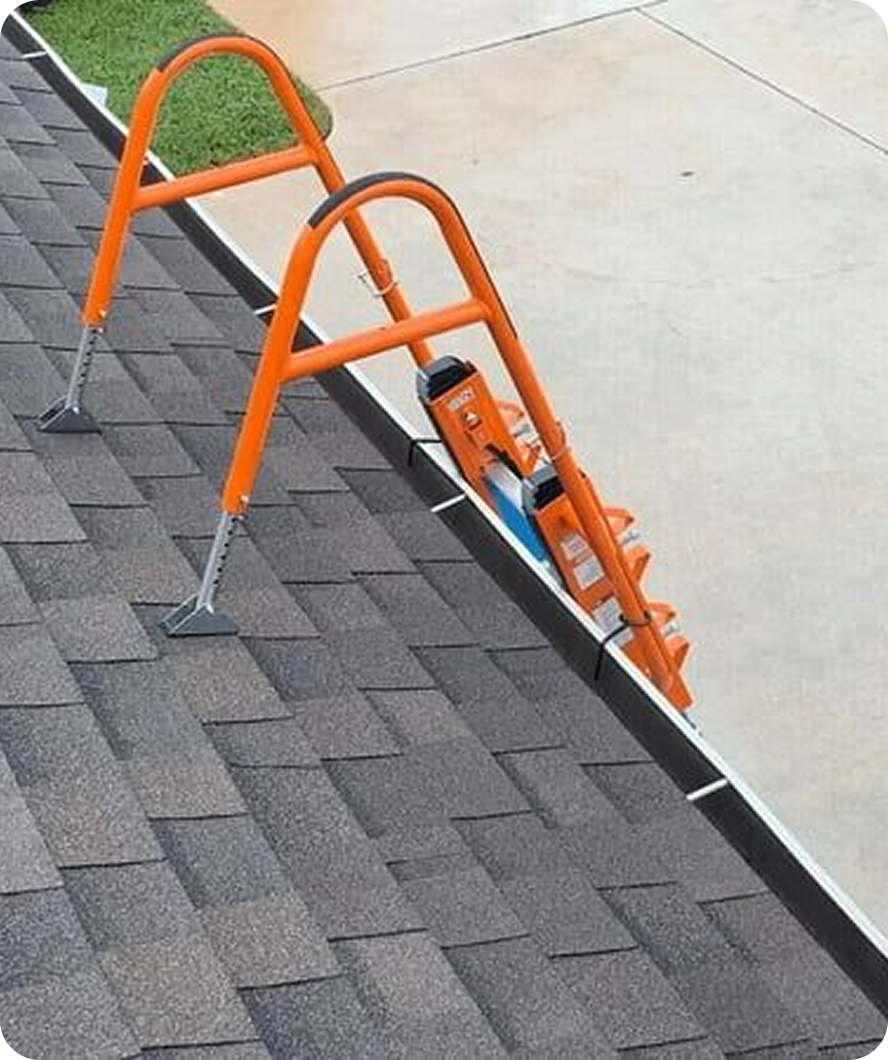
On Top Safety offers the Life Grab 360 Roof Bracket and Elevated Roof Bracket as part of its specialized roofing safety product line.
These products address different roofing applications and should be evaluated according to their individual specifications and intended uses.
Ladder Stabilization Equipment
Ladders are used throughout roofing, construction, and maintenance operations.
However, improper positioning, inadequate securement, and unstable ground conditions can create hazards involving ladder sliding, shifting, and kick-out.
Ladder stabilization equipment is designed to address certain movement and stability concerns.
Effective ladder safety practices include:
Selecting the appropriate ladder.
Inspecting ladders before use.
Positioning ladders on suitable surfaces.
Securing ladders when required.
Maintaining proper climbing practices.
Using compatible stabilization accessories.
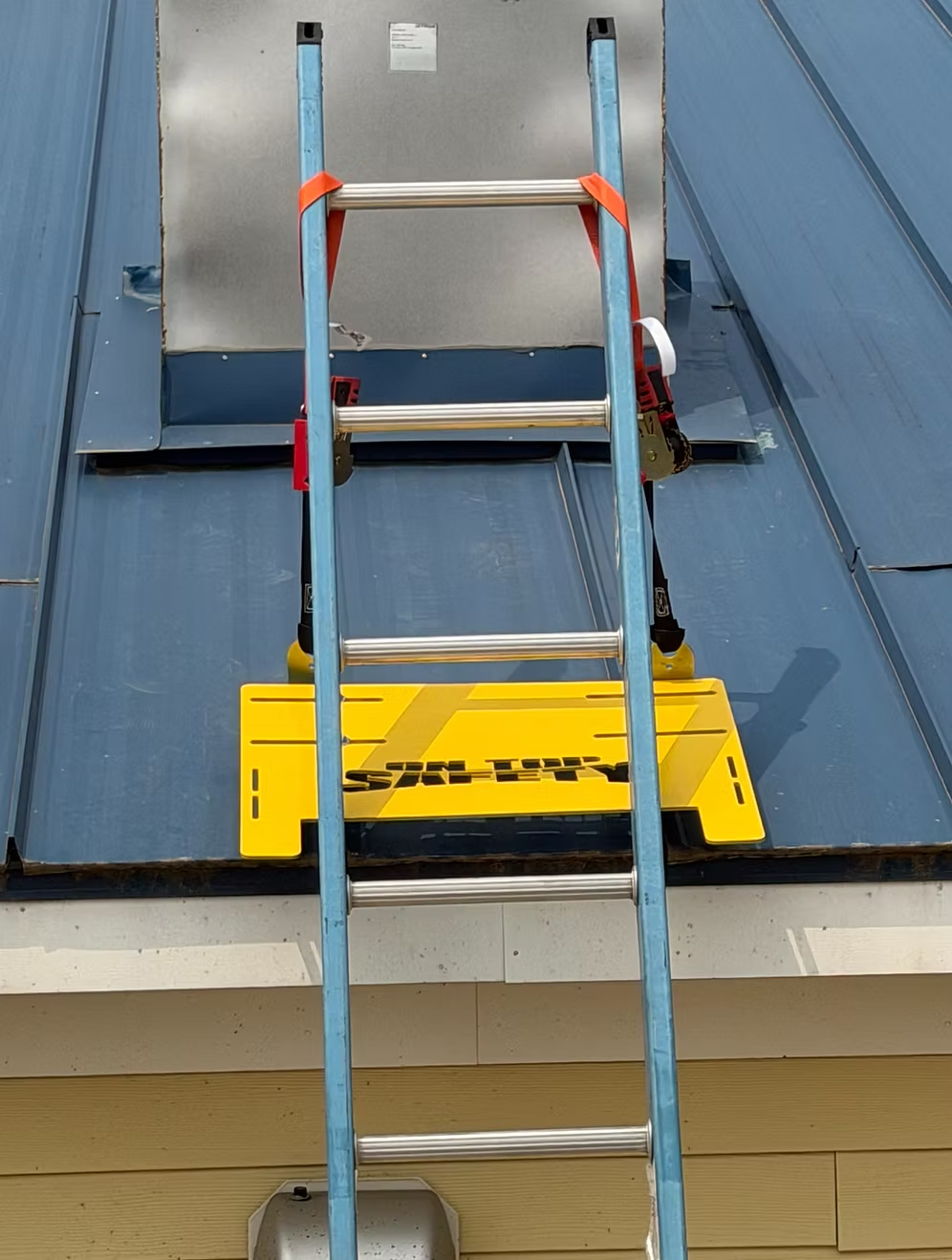
On Top Safety's Life Grab Upper and Lower Ladder Stabilizers are designed to help reduce ladder movement and improve stability.
For roofing contractors, HVAC technicians, and service professionals, ladder stabilization can be an important consideration when developing a comprehensive jobsite safety program.
Personal Fall Arrest Systems
Personal fall arrest systems are commonly used when workers must perform tasks where other forms of protection are not practical or sufficient.
A complete system generally includes:
A full-body harness.
An appropriate connecting device.
A suitable anchorage.
The system must be properly designed and configured for the specific application.
Workers should receive training covering harness fit, connection procedures, equipment inspections, fall clearance, and emergency rescue procedures.
4. How to Choose the Right Fall Protection Solution
Choosing the right equipment requires understanding the hazards associated with the work environment.
A solution that works well for a commercial roofing project may not be appropriate for an industrial maintenance facility.
Employers should consider the following factors before selecting fall protection equipment.
Identify Workplace Hazards
Start by evaluating the work environment.
Look for:
Unprotected roof edges.
Floor and roof openings.
Skylights.
Elevated platforms.
Ladder access points.
Sloped or slippery surfaces.
Fragile roofing materials.
Potential swing fall hazards.
Nearby obstructions and lower levels.
The goal is to identify hazards before employees begin work.
Evaluate the Work Being Performed
Consider the actual tasks employees will complete.
Will workers be installing roofing materials, maintaining rooftop equipment, inspecting an industrial platform, or accessing an elevated structure?
Different tasks may require different protective systems.
Consider Equipment Compatibility
Fall protection equipment frequently operates as part of a complete system.
Harnesses, connectors, lanyards, lifelines, and anchorage components must be compatible with one another.
Using equipment outside its intended configuration can compromise safety.
Always follow manufacturer specifications and applicable regulations.
Evaluate Ease of Installation and Use
Equipment should be practical for the environment in which it will be used.
Consider:
Installation time.
Portability.
Ease of inspection.
Maintenance requirements.
Compatibility with existing equipment.
Employee training requirements.
However, convenience should never take priority over appropriate system design and safety performance.
Review Product Documentation
Before purchasing equipment, review manufacturer instructions, technical specifications, inspection procedures, and applicable performance information.
Understanding the limitations of a product is just as important as understanding its intended benefits.
5. OSHA Fall Protection Requirements for Employers
The Occupational Safety and Health Administration establishes requirements for employers whose workers may be exposed to fall hazards.
For construction activities, OSHA 29 CFR 1926 Subpart M is one of the most important regulatory references.
The 6-Foot Fall Protection Requirement
Under OSHA 1926.501(b)(1), employees working on unprotected sides or edges 6 feet or more above a lower level generally must be protected using guardrail systems, safety net systems, or personal fall arrest systems.
However, different construction activities have their own specific provisions.
For example:
Low-slope roofing: 1926.501(b)(10).
Steep-slope roofing: 1926.501(b)(11).
Residential construction: 1926.501(b)(13).
Floor and roof openings: 1926.501(b)(4).
Employers must identify the applicable requirements for their specific work activities.
OSHA Equipment Requirements
OSHA 1926.502 establishes performance requirements for different fall protection systems.
These include requirements for:
Guardrail systems.
Safety net systems.
Personal fall arrest systems.
Positioning device systems.
Warning line systems.
Covers and protection from falling objects.
Selecting equipment that is appropriate for the jobsite and meets applicable requirements is essential.
OSHA Fall Protection Training
Under OSHA 1926.503, employers must provide fall protection training for employees who may be exposed to fall hazards.
Training should address hazard recognition, equipment operation, protective systems, and procedures for minimizing fall risks.
Employers must maintain written training certification records and provide additional training when changes in the workplace, equipment, or employee knowledge indicate it is necessary.
Official OSHA resources:
Fall Protection Standards: https://www.osha.gov/laws-regs/regulations/standardnumber/1926/1926SubpartM
OSHA Construction Fall Protection: https://www.osha.gov/fall-protection/construction
OSHA Training Requirements: https://www.osha.gov/laws-regs/regulations/standardnumber/1926/1926.503
6. The Importance of Workplace Fall Protection Inspections
Even the highest-quality safety equipment requires regular inspection and maintenance.
Damaged, improperly installed, or incorrectly maintained equipment can compromise an otherwise effective fall protection program.
Employers should establish inspection procedures that address all equipment used throughout their operations.
Harness and Lanyard Inspections
Inspect personal fall protection equipment for:
Cuts and frayed webbing.
Damaged stitching.
Burn or chemical damage.
Corrosion or deformation.
Damaged connectors.
Missing identification labels.
Evidence of previous fall loading.
Guardrail Inspections
Check for:
Bent or damaged posts.
Loose connections.
Missing mounting hardware.
Damaged rails.
Improper installation.
Unauthorized modifications.
Ladder and Stabilization Equipment Inspections
Inspect:
Ladder rails and rungs.
Ladder feet.
Locks and extension mechanisms.
Securement components.
Stabilization attachments.
Signs of structural damage.
Equipment that is damaged or has been subjected to a fall must be handled according to manufacturer instructions and applicable requirements before being returned to service.
7. Developing a Workplace Fall Protection Plan
Purchasing equipment is only one part of an effective fall protection strategy.
Employers should establish a structured program that addresses the hazards employees encounter and provides clear procedures for working safely.
Here are six important steps.
Step 1: Conduct a Job Hazard Assessment
Evaluate the workplace and identify potential fall hazards before work begins.
Consider employee access, roof conditions, equipment placement, elevated surfaces, and surrounding obstacles.
Step 2: Select Appropriate Protective Equipment
Choose systems that address the identified hazards and meet applicable regulatory requirements.
Whenever practical, prioritize solutions that prevent workers from reaching fall hazards.
Step 3: Establish Written Safety Procedures
Document equipment requirements, inspection procedures, employee responsibilities, and emergency response plans.
For situations where OSHA specifically requires a written fall protection plan, ensure that the plan meets the applicable regulatory provisions.
Step 4: Train Employees
Employees should understand how to identify hazards and properly use the equipment provided to them.
Training should include hands-on demonstrations whenever appropriate.
Step 5: Establish Inspection Procedures
Create consistent inspection schedules and procedures for all protective equipment.
Ensure employees understand how to identify damaged or defective components.
Step 6: Review and Improve the Program
Evaluate workplace conditions, employee feedback, equipment performance, and incident reports.
Update safety procedures as necessary to address new hazards and changing working conditions.
8. How Technology Is Improving Workplace Fall Protection
Technology continues to influence how employers approach workplace safety.
New equipment and monitoring solutions can help organizations identify hazards, improve communication, and support more effective safety programs.
Some emerging technologies include:
Wearable Safety Technology
Wearable devices can monitor certain aspects of employee activity and environmental conditions.
Depending on the technology, these devices may provide alerts when workers enter designated hazardous areas.
Drone-Assisted Inspections
Drones can help inspect elevated structures, rooftops, and difficult-to-access areas without immediately placing an employee in those locations.
They can be particularly useful for preliminary visual assessments.
Improved Equipment Materials
Manufacturers continue to develop materials designed to improve equipment durability, comfort, and performance.
Advancements in materials can support the development of lighter and more practical safety equipment.
Fall Detection and Emergency Communication
Certain monitoring systems can detect potential fall events and notify designated personnel.
These technologies may complement emergency response procedures, but they do not replace properly designed fall protection systems or rescue planning.
Technology should be viewed as an additional tool within a broader safety program.
9. Building a Culture of Workplace Safety
The success of a fall protection program depends on more than equipment and written procedures.
It requires a workplace culture where employees and management consistently prioritize safety.
Organizations can encourage this through:
Leadership involvement: Supervisors and management should demonstrate the same safety practices expected of employees.
Employee communication: Workers should feel comfortable reporting hazards, damaged equipment, and near misses.
Consistent training: Safety education should continue as equipment and workplace conditions change.
Accountability: Employees should understand their responsibilities and follow established procedures.
Continuous improvement: Safety programs should be reviewed regularly and updated when improvements are necessary.
A strong workplace safety culture makes hazard awareness part of everyday operations rather than an occasional conversation.
10. Investing in Effective Fall Protection Solutions
Selecting appropriate safety equipment is an investment in the people who keep businesses and projects moving.
For contractors and employers, the right products can help address specific workplace hazards, support safety procedures, and improve the consistency of daily operations.
At On Top Safety, we develop innovative safety products designed to address real-world challenges faced by roofing contractors, construction professionals, and workers operating at heights.
Our product line includes several specialized solutions.
Roof Safety and Fall Protection
The Life Grab 360 Roof Bracket and Elevated Roof Bracket provide specialized options for roofing applications.
Roof Edge Protection
The Fast Track Guardrail System and Fast Track 2x4 System offer solutions for contractors evaluating roof edge protection and guardrail applications.
Ladder Stabilization
The Life Grab Upper and Lower Ladder Stabilizers are designed to help reduce ladder movement and improve stability.
Specialized Safety Equipment
Our Falcon and Eagle Claw Tie Off Carts, along with additional specialized products, address other applications involving workplace safety and fall protection.
We believe that developing practical solutions to real-world safety challenges is an important part of advancing the industry.
Explore the complete On Top Safety product line to learn more about our workplace safety and fall protection solutions.
Frequently Asked Questions About Fall Protection Solutions
1. What are the most effective fall protection solutions?
Effective solutions depend on the work environment and hazards involved. Common options include guardrails, personal fall arrest systems, safety nets, properly secured covers, and personal fall restraint systems.
2. What is the difference between fall prevention and fall protection?
Fall prevention refers to measures designed to prevent workers from reaching a fall hazard. Fall protection is a broader term that includes both prevention systems and equipment designed to arrest a fall.
3. What industries need fall protection equipment?
Construction, roofing, manufacturing, HVAC, industrial maintenance, bridge work, solar installation, and many other industries rely on fall protection equipment.
4. What does OSHA require for fall protection?
OSHA requirements vary by industry and work activity. Under many construction provisions, fall protection is required when workers are exposed to falls of 6 feet or more above a lower level.
5. What is the most common type of fall protection equipment?
Common equipment includes full-body harnesses, lanyards, lifelines, guardrail systems, anchorage connectors, and safety nets.
6. How often should fall protection equipment be inspected?
Equipment should be inspected before use and according to manufacturer instructions and applicable requirements. Damaged or defective equipment must be removed from service and evaluated appropriately.
7. Are guardrails better than safety harnesses?
Guardrails provide collective protection for workers within a protected area, while harnesses are components of individual fall protection systems. Neither is universally better. The correct solution depends on the work environment and applicable requirements.
8. Can ladder stabilizers replace fall protection equipment?
No. Ladder stabilizers address certain ladder movement and stability concerns. They do not replace required fall protection systems or proper ladder safety practices.
9. Why is employee training important?
Employees must understand the hazards they face and how to properly use, inspect, and maintain their safety equipment. Training is a required component of applicable OSHA fall protection programs.
10. How can employers improve workplace fall protection?
Employers can improve fall protection by conducting hazard assessments, selecting appropriate equipment, providing employee training, establishing inspection procedures, and reviewing their safety programs regularly.
Final Thoughts: A Better Approach to Workplace Fall Protection
Effective fall protection requires a combination of appropriate equipment, employee training, hazard awareness, and consistent safety procedures.
From commercial roofing and construction to industrial maintenance and HVAC operations, workers rely on properly selected safety solutions to address the risks associated with elevated work.
Employers should evaluate their workplace hazards, understand applicable OSHA requirements, and select equipment designed for the specific tasks their employees perform.
At On Top Safety, our mission is to develop innovative products that address the challenges faced by professionals working at heights.
We believe that better equipment, practical innovation, and a commitment to workplace safety can make a meaningful difference across the industries we serve.
Explore our complete line of fall protection equipment and discover how On Top Safety is helping advance workplace safety.